
Dental Implants in Mumbai

What Are Dental Implants?
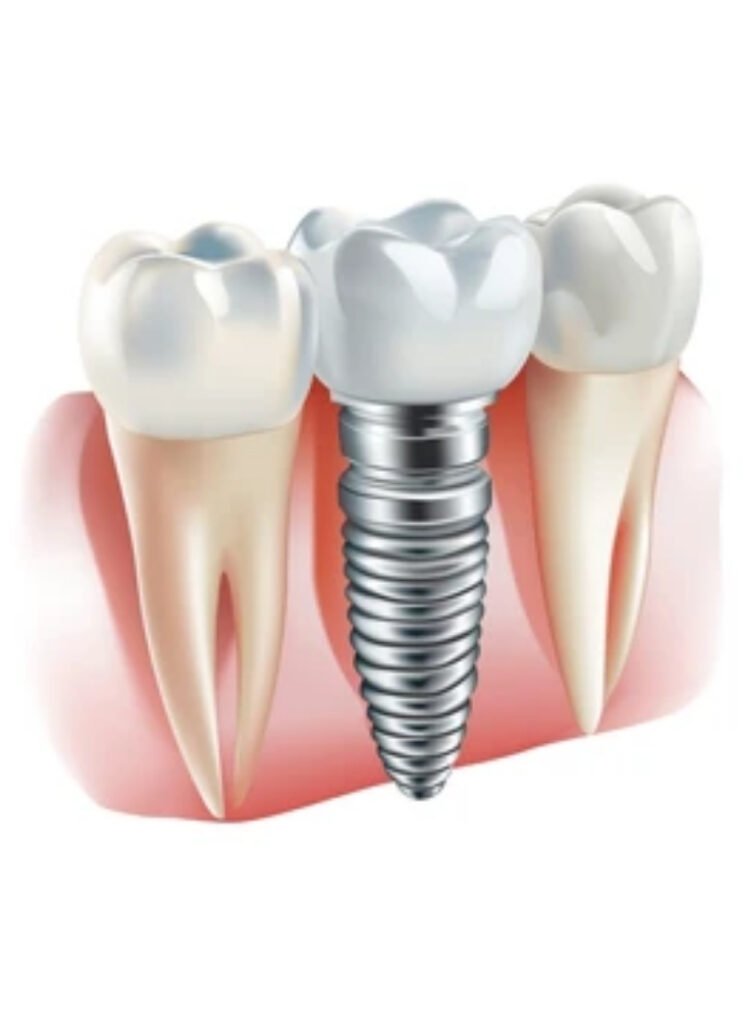
Dental implants are small posts, usually made of titanium, placed into the jawbone to act as artificial tooth roots. After placement, the implant integrates with the surrounding bone through a process called osseointegration. Once it is sufficiently stable, a dental crown, bridge, or denture can be attached to replace the missing tooth or teeth.
Dental implant treatment may be used to replace a single tooth, several missing teeth, or support a full-arch restoration. The treatment plan depends on the number and position of missing teeth, bone availability, gum condition, bite forces, and the type of final restoration planned.
What Types of Dental Implant Treatments Are Available?
The choice of dental implant treatment depends on how many teeth are missing and the condition of the supporting jawbone.

Single-Tooth Implants
Replace one missing tooth with an implant-supported crown without relying on adjacent teeth for support.

Multiple-Tooth Implants
Replace several missing teeth using individual implants or an implant-supported bridge.
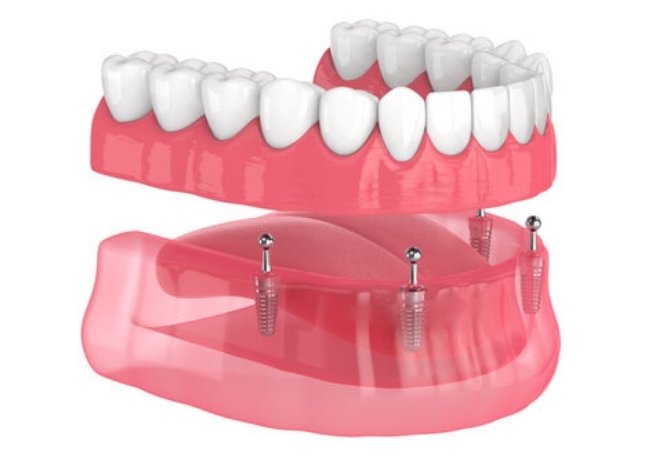
Implant-Supported Dentures
Improve the retention and stability of removable dentures using dental implants.

Bone Grafting for Implants
Add bone where necessary to improve the foundation for implant placement.

Immediate Implant Placement
Place an implant at the time of tooth extraction in selected cases when clinical conditions permit.
When Should You Consider Dental Implants?
Dental implants may be considered when one or more teeth are missing and a fixed or implant-supported replacement is being evaluated. A consultation helps determine whether the jawbone and surrounding tissues can support an implant safely and predictably. You may consider an implant assessment if you have:

One or more missing teeth affecting chewing

A tooth that requires extraction and replacement

Difficulty keeping a removable denture stable

Several missing teeth affecting bite function

A need for full-arch tooth replacement

Denture that lacks adequate retention
How Is Dental Implant Treatment Planned?
Careful assessment is essential because implant placement must account for both the surgical site and the final tooth restoration.
Oral and Dental Examination
The surgeon assesses the missing tooth area, gum condition, neighbouring teeth, bite, and any signs of infection or bone loss.
Imaging and Bone Assessment
Dental X-rays or CBCT scans may be used to assess bone height and width and identify important structures, such as nerves and the maxillary sinus.
Medical and Risk Assessment
Relevant medical conditions, medications, smoking, oral hygiene, and factors that may affect healing are reviewed before treatment.
Implant and Restoration Planning
The number, position, and dimensions of implants are planned in relation to the intended crown, bridge, or denture. Digital planning or CAD/CAM-based methods may be used when appropriate.
Preparation Before Surgery
If required, gum disease is treated, infected teeth are addressed, and bone grafting or other preparatory procedures are planned before or alongside implant placement.
Choosing the Right Dental Implant Procedure
The appropriate technique depends on the available bone, the number of missing teeth, the condition of the surrounding tissues, and the planned restoration.
Single dental implant
Replacement of one missing tooth
Implant-supported bridge
Replacement of multiple adjacent teeth
Full-arch implant rehabilitatio
Replacement of most or all teeth in an arch
Implant-supported denture
Improved retention of a removable denture
Bone grafting with implants
When additional bone support is needed

What Happens During Dental Implant Surgery?
Dental implant placement is usually performed under local anaesthesia, with sedation or general anaesthesia considered in selected cases. The surgeon prepares the site in the jawbone and places the implant according to the treatment plan. If bone grafting is needed, it may be carried out before or during implant surgery, depending on the clinical situation.
After placement, the implant may be left to integrate with the bone before the final restoration is attached. In selected cases with sufficient stability and suitable bite conditions, a temporary tooth or restoration may be provided earlier. The final crown, bridge, or denture is designed to fit the bite and function of the remaining teeth.
The duration and number of appointments depend on whether additional procedures are required and how the implant site heals.
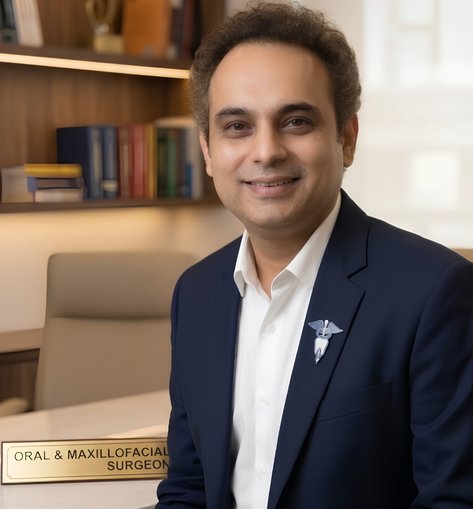
Dr. Sanmit Joshi
Expertise in Dental Implant Surgery and Advanced Implant Rehabilitation
Dr. Sanmit Joshi is an Oral & Maxillofacial Surgeon with an MDS in Oral & Maxillofacial Surgery and specialized training in implantology. His clinical expertise includes dental implant placement, complex implant cases, and rehabilitation of missing teeth, with treatment planning based on jawbone condition, anatomical structures, and functional requirements.
He is a Fellow of the International Congress of Oral Implantologists (ICOI) and has completed a certificate course in CAD/CAM-based implant rehabilitation at the Herman Ostrow School of Dentistry, University of Southern California (USC). This training supports his approach to evaluating implant positioning and planning restorations according to the available bone support and the patient’s oral rehabilitation needs.
Dr. Joshi also has experience in complex oral and maxillofacial surgery, helping him assess cases that may require additional procedures, such as bone grafting, before implant placement. He consults at Jaslok Hospital and Research Centre, VED Hospital in Dadar, and Baysmiles Clinic at Kemps Corner, Mumbai.
Years of Post-Fellowship Experience
Years in Oral & Maxillofacial Surgery
Advanced Surgical Training Programs
Specialized Areas of Surgical Expertise
Frequently Asked Questions About Dental Implants
Are dental implants suitable for everyone?
No. Suitability depends on bone availability, gum health, general health, oral hygiene, and other factors that affect healing. Some patients may need preparatory treatment before implants can be placed.
Can a dental implant be placed immediately after tooth extraction?
In selected cases, yes. Immediate placement depends on the condition of the extraction site, infection status, available bone, and the ability to achieve sufficient implant stability.
What happens if there is not enough jawbone for an implant?
Bone grafting or other augmentation procedures may be considered to improve support. Whether this is suitable depends on the amount and location of bone loss and the patient’s overall treatment requirements.
Can dental implants fail?
Yes. An implant may fail to integrate with the bone or develop complications later. Smoking, uncontrolled gum disease, poor oral hygiene, and certain health factors can increase risk, so careful planning and long-term maintenance are important.
How long does dental implant treatment take?
The timeline varies. Straightforward cases may require fewer stages, while bone grafting, healing requirements, or complex restorations can extend treatment over several months.
Is dental implant surgery painful?
Local anaesthesia is used to control pain during the procedure. Some discomfort and swelling may occur afterward, but these can generally be managed with the aftercare instructions and medication prescribed by the treating clinician.
How do I care for my dental implants?
Brush twice daily, clean around the implant restoration carefully, and attend regular dental reviews. Your clinician may recommend interdental brushes or other cleaning aids based on the type of restoration.
Can dental implants replace all my teeth?
Yes. Full-arch implant rehabilitation can support replacement teeth for an entire upper or lower arch. The number of implants and the type of restoration depend on the jawbone, bite, and clinical assessment.
Get an Evaluation for Dental Implants in Mumbai
Replacing missing teeth involves more than placing an implant. Bone support, gum health, bite function, and the final restoration all influence the treatment plan. Book a Consultation with Dr. Sanmit Joshi to discuss your missing teeth, implant suitability, and available treatment options.
