
TMJ Surgery in Mumbai

What Is the Temporomandibular Joint?
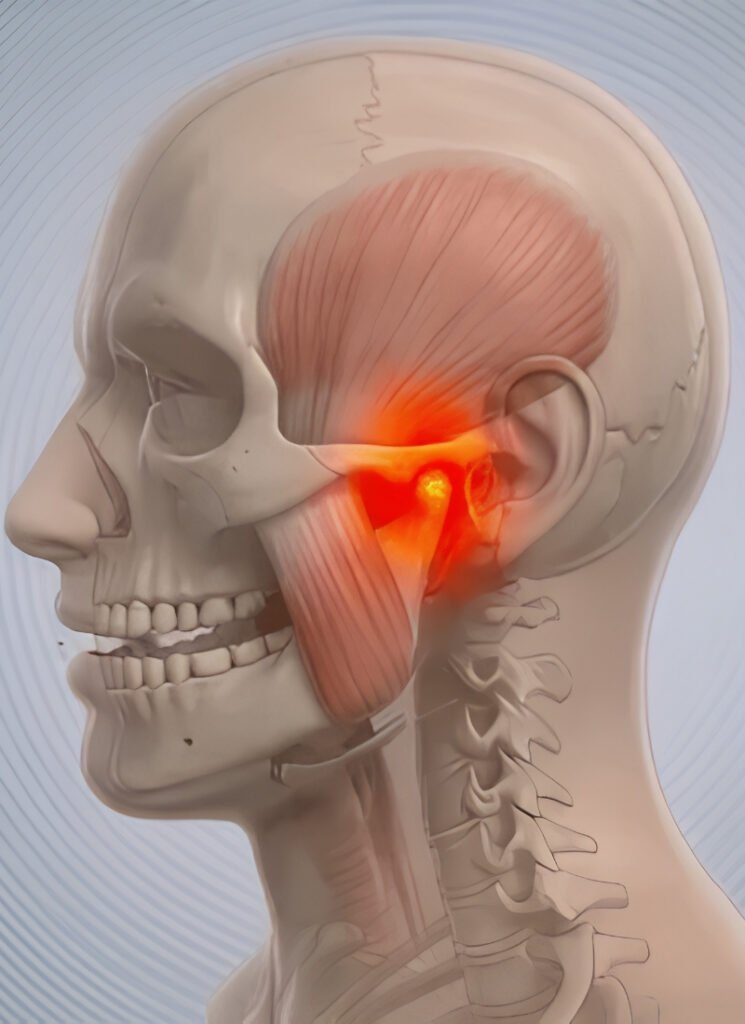
The temporomandibular joint (TMJ) connects the lower jawbone to the skull on both sides of the face and allows the jaw to move during speaking, chewing, swallowing, and opening the mouth. A small disc within the joint helps the jaw move smoothly and absorbs forces during movement. Problems affecting the joint, disc, surrounding muscles, or jaw structure can cause temporomandibular disorders (TMD), which may affect everyday activities such as eating and speaking. These problems can develop due to disc displacement, arthritis and joint degeneration, previous jaw injury, repeated strain, clenching or grinding, structural abnormalities, or restricted joint movement such as ankylosis. Not every clicking sound or jaw discomfort requires surgery; a clinical examination and appropriate imaging help determine the underlying problem and the right treatment approach.
When Is TMJ Surgery Considered?
Surgery is generally considered when significant joint disease or structural problems continue despite appropriate non-surgical treatment, or when the condition is causing substantial restriction of jaw function. TMJ surgery may be discussed when there is:

Advanced joint degeneration

Persistent joint pain and jaw locking

Markedly restricted mouth opening

Severe disc-related problems

Significant structural joint damage

Trauma-related joint abnormalities
How Is a TMJ Problem Evaluated?
A proper TMJ assessment begins with understanding how the jaw moves and what is causing the dysfunction. A detailed history and examination are followed by imaging when required.
Clinical Examination
Jaw opening, movement pattern, joint sounds, tenderness, bite, muscle activity, and facial symmetry are assessed.
Imaging
Imaging may include X-rays, CT/CBCT scans, or MRI. MRI is particularly useful when evaluation of the TMJ disc and soft tissues is required.
Functional Assessment
The effect of the disorder on chewing, speaking, mouth opening, and daily jaw function is considered alongside the imaging findings.
Treatment Planning
The findings are reviewed to determine whether medication, physiotherapy, splint therapy, minimally invasive treatment, or surgery is appropriate.
TMJ Surgery Options Depend on the Joint Problem
There is no single operation for every TMJ disorder. The procedure is selected according to the condition affecting the joint.
Arthrocentesis
Irrigating the joint and improving movement
Arthroscopy
Evaluating and treating selected joint problems
Open TMJ Surgery
Addressing structural or disc-related abnormalities
Disc Procedures
Treating selected internal joint derangements
Joint Reconstruction
Restoring function in severely damaged joints

What Happens During TMJ Surgery?
The surgical approach varies considerably depending on the procedure.
For minimally invasive procedures such as arthrocentesis or arthroscopy, small access points are used to enter the joint. The joint may be irrigated, examined, and treated using specialized instruments.
For open TMJ procedures, an incision is made near the joint to provide direct access to the affected structures. Depending on the problem, the surgeon may address the disc, damaged joint surfaces, abnormal bone, or other structural changes.
In advanced cases where the joint is severely damaged, TMJ reconstruction or total joint replacement may be considered. These operations require detailed assessment of jaw movement, bite, joint anatomy, and the surrounding structures.
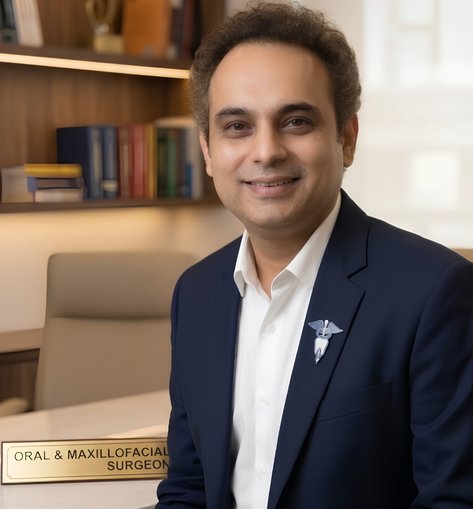
Dr. Sanmit Joshi
TMJ Expertise Backed by Maxillofacial Training
Dr. Sanmit Joshi is an Oral & Maxillofacial Surgeon and Head & Neck Oncosurgeon with over a decade of post-fellowship clinical experience. His practice includes complex conditions involving the jaws, facial structures, oral cavity, and temporomandibular joints.
He has completed a Clinical Fellowship in Temporomandibular Joint Disorders at UCL Eastman Dental Institute, London, UK, with focused training in the assessment and management of TMJ disorders. His maxillofacial training also allows him to evaluate jaw-joint problems alongside bite, facial anatomy, previous trauma, and related oral conditions.
Dr. Joshi completed his MDS in Oral & Maxillofacial Surgery and Fellowship in Head & Neck Surgical Oncology at Tata Memorial Hospital, Mumbai. He currently practices at Jaslok Hospital and Research Centre, VED Hospital, Dadar, and Baysmiles Clinic, Mumbai.
Years of Post-Fellowship Experience
Years in Oral & Maxillofacial Surgery
Advanced Surgical Training Programs
Specialized Areas of Surgical Expertise
Frequently Asked Questions About TMJ Surgery
Does every TMJ problem require surgery?
No. Many TMJ disorders can be managed with medication, physiotherapy, splints, activity modification, or other non-surgical treatments. Surgery is considered when the clinical condition warrants it.
How long does it take to recover from TMJ surgery?
Recovery varies according to the procedure. Minimally invasive procedures generally have a shorter recovery than open TMJ surgery or joint reconstruction.
Can TMJ surgery improve difficulty opening the mouth?
It can, depending on the reason for restricted movement. Conditions such as ankylosis, structural joint damage, or certain internal joint disorders may require surgical treatment to improve jaw movement.
Can a damaged TMJ be replaced?
In severely damaged joints, reconstruction or total TMJ replacement may be considered. The suitability of joint replacement depends on the extent and cause of joint damage.
How do I know if I need TMJ surgery?
A consultation is needed to determine the cause and severity of the problem. Examination and appropriate imaging help establish whether surgery is likely to provide a meaningful benefit.
What tests are needed before TMJ surgery?
The evaluation may include a clinical examination along with X-rays, CT or CBCT imaging, and MRI when assessment of the joint disc and soft tissues is required.
What happens if TMJ problems are left untreated?
The consequences depend on the underlying condition. Some problems remain stable, while progressive joint disease may lead to increasing pain, reduced mouth opening, changes in jaw movement, or difficulty chewing.
Is TMJ surgery painful?
Some discomfort, swelling, and jaw stiffness are expected after surgery. Pain medicines and appropriate post-operative care are used to manage these symptoms during recovery.
Get the Right Evaluation for Your TMJ Problem
Jaw pain, locking, restricted mouth opening, or persistent joint problems should be evaluated to identify the underlying cause. Consult Dr. Sanmit Joshi for TMJ Surgery in Mumbai.
