
Oral Cancer Surgery in Mumbai

What Is Oral Cancer Surgery?
Oral cancer surgery involves removing a cancerous growth from the oral cavity, along with an appropriate margin of surrounding tissue when indicated. Depending on the location and extent of the tumour, surgery may involve the tongue, cheek lining, gums, floor of the mouth, palate, jawbone, or lip. The aim is to remove the cancer adequately while preserving as much function and healthy tissue as clinically possible.
Some patients may also require surgery to assess or treat lymph nodes in the neck, where oral cancers can spread. If removing the tumour creates a significant defect, reconstructive surgery may be performed using nearby tissue, tissue transferred from another part of the body, or bone reconstruction when necessary. The final treatment plan depends on the cancer stage, pathology findings, general health, and whether additional treatments such as radiotherapy or chemotherapy are indicated.
What Types of Oral Cancer May Require Surgery?
The surgical approach depends on where the cancer begins, its size and depth, and whether it has spread to surrounding tissues or lymph nodes.

Tongue Cancer
Surgery may remove the affected portion of the tongue, depending on the tumour’s size, depth, and location.

Buccal Mucosa Cancer
Cancer of the inner cheek may require removal of the affected lining and, in some cases, adjacent tissue or jawbone.

Floor of Mouth Cancer
Surgery depends on the tumour’s relationship to the tongue, salivary ducts, and nearby jaw structures.

Gum and Jaw Cancer
If the tumour involves the jawbone, surgery may include removing part of the upper or lower jaw.

Palate Cancer
Surgery is planned according to the extent of disease and its proximity to the upper jaw and nasal cavity.
When Should You Seek Evaluation for Oral Cancer?
A mouth ulcer or patch does not automatically indicate cancer, but a persistent or unusual change should not be ignored. Early evaluation can help identify the cause and determine whether a biopsy or further investigation is necessary. Arrange an assessment if you notice:

A persistent red or white patch inside the mouth

Unexplained bleeding or persistent pain in the mouth

Numbness in the tongue, lip, or another area of the mouth

Difficulty chewing, swallowing, speaking, or moving the tongue

A change in the fit of dentures or unexplained loosening of teeth

A mouth ulcer or wound that does not heal within 2 - 3 weeks

How Is Oral Cancer Evaluated?
Evaluation establishes whether a lesion is cancerous, defines its extent, and helps determine the most appropriate treatment.
Clinical Examination
The surgeon examines the lesion’s location, size, surface, firmness, and involvement of nearby tissues. The mouth, tongue movement, jaw, and neck lymph nodes are assessed.
Biopsy and Histopathology
A tissue sample is examined under a microscope to confirm the diagnosis and identify the cancer type. The biopsy result is central to treatment planning.
Imaging Investigations
CT or MRI may be used to assess tumour extent and involvement of structures such as the jaw, tongue muscles, or nearby soft tissues. Additional imaging may be recommended depending on the clinical findings and suspected stage.
Neck Assessment
The neck is examined for enlarged lymph nodes. Ultrasound, needle sampling, or other investigations may be used when a lymph node is suspicious.
Staging and Treatment Planning
The team considers tumour size and depth, involvement of nearby structures, lymph node status, and evidence of spread to other parts of the body.
Choosing the Right Oral Cancer Surgery
The operation is selected according to the cancer’s location, stage, depth, and involvement of surrounding structures. The following procedures may be considered individually or in combination.
Wide local excision
For removing a tumour with an appropriate margin of surrounding tissue
Partial glossectomy
When cancer affects part of the tongue
Buccal mucosa resection
When cancer involves the inner cheek lining
Maxillectomy
For selected cancers involving the upper jaw or adjacent structures
Neck dissection
When neck lymph nodes require removal or surgical assessment

What Happens During Oral Cancer Surgery?
Before surgery, the diagnosis, imaging, biopsy findings, and planned extent of removal are reviewed. The surgeon explains the expected procedure, possible need for neck surgery or reconstruction, likely hospital stay, and important risks. Anaesthesia and preparation are arranged according to the operation and the patient’s medical condition.
During surgery, the tumour is removed with an appropriate margin of tissue. If indicated, lymph nodes in the neck are removed, and the surgical specimen is sent for histopathological examination. For larger defects, reconstruction may be performed using local tissue, tissue transferred from another part of the body, or bone and soft tissue together. The choice depends on the location and size of the defect and the functions that need to be restored.
After surgery, the team monitors healing, pain control, nutrition, airway safety where relevant, and the ability to swallow or speak. Some patients temporarily require a feeding tube or additional support during recovery. Final pathology helps establish whether the surgical margins and lymph node findings indicate a need for further treatment.
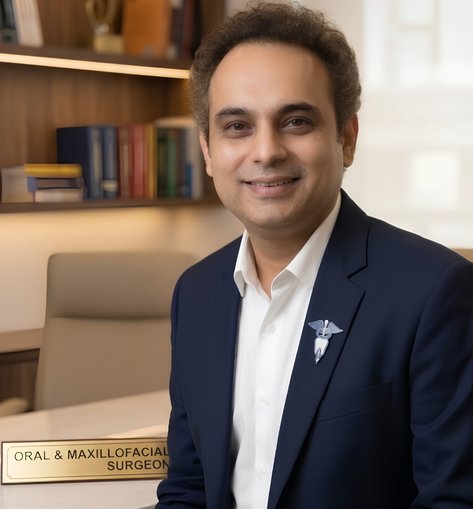
Dr. Sanmit Joshi
Expertise in Oral Cancer Surgery and Head & Neck Reconstruction
Dr. Sanmit Joshi is an Oral & Maxillofacial Surgeon with an MDS in Oral & Maxillofacial Surgery and a Fellowship in Head & Neck Surgical Oncology from Tata Memorial Hospital, Mumbai. His clinical work includes the surgical management of complex conditions affecting the mouth, jaws, and surrounding facial structures. In oral cancer cases, assessment focuses on defining the tumour’s extent, reviewing biopsy and imaging findings, and planning removal in relation to nearby structures and essential oral functions.
For patients requiring more extensive surgery, planning may also involve reconstruction of tissue or bone removed during cancer treatment. This can be important for restoring the continuity of the jaw and supporting speech, swallowing, and chewing. Dr. Joshi’s experience in head and neck oncological surgery and reconstructive procedures informs the planning of complex cases, including those that may require coordination with other specialists. He consults at Jaslok Hospital and Research Centre, VED Hospital in Dadar, and Baysmiles Clinic at Kemps Corner, Mumbai.
Years of Post-Fellowship Experience
Years in Oral & Maxillofacial Surgery
Advanced Surgical Training Programs
Specialized Areas of Surgical Expertise
Frequently Asked Questions About Oral Cancer Surgery
Is every persistent mouth ulcer a sign of oral cancer?
No. Mouth ulcers can develop for many reasons, including trauma, infection, and inflammatory conditions. However, an ulcer that does not heal within two to three weeks, particularly if it is unexplained or changing, should be examined by a clinician.
Will part of my tongue or jaw need to be removed?
That depends on the tumour’s location and extent. Limited cancers may require removal of a smaller area, while tumours involving deeper tissues or bone may need a more extensive operation. Imaging and biopsy findings help guide this decision.
Why might lymph nodes in the neck need to be removed?
Oral cancer can spread to lymph nodes in the neck, sometimes before a lump becomes noticeable. Neck dissection may be recommended when nodes are involved or when the risk of spread warrants surgical management.
How often will I need follow-up after oral cancer treatment?
Follow-up is usually more frequent during the initial period after treatment and continues over the long term. The schedule depends on the cancer stage, treatment received, healing, and individual risk factors.
Is a biopsy necessary before oral cancer surgery?
A biopsy is usually required to confirm the diagnosis before definitive treatment is planned. The tissue result helps identify the cancer type and guides decisions about surgery and any additional treatment.
Can oral cancer be treated with surgery alone?
Some early cancers may be treated primarily with surgery. Others may require radiotherapy, chemotherapy, or a combination of treatments depending on the stage, pathology findings, lymph node involvement, and other clinical factors.
Will oral cancer surgery affect my speech or swallowing?
It can, depending on the site and amount of tissue removed. Some patients need speech and swallowing rehabilitation, and reconstruction may help restore function where appropriate. The expected effects should be discussed before surgery.
What is reconstructive surgery after oral cancer removal?
Reconstructive surgery repairs the defect created when cancerous tissue is removed. Depending on the defect, the surgeon may use nearby tissue, tissue transferred from another body site, or bone and soft tissue together.
Get an Evaluation for Oral Cancer Surgery in Mumbai
A persistent oral lesion, confirmed oral cancer diagnosis, or suspicious finding on examination needs a clear assessment of the tumour and the structures it may involve. Book a Consultation with Dr. Sanmit Joshi to discuss your diagnosis, available surgical options, and the next steps in treatment planning.
