
Wisdom Tooth Removal in Mumbai

What Is Wisdom Tooth Removal?
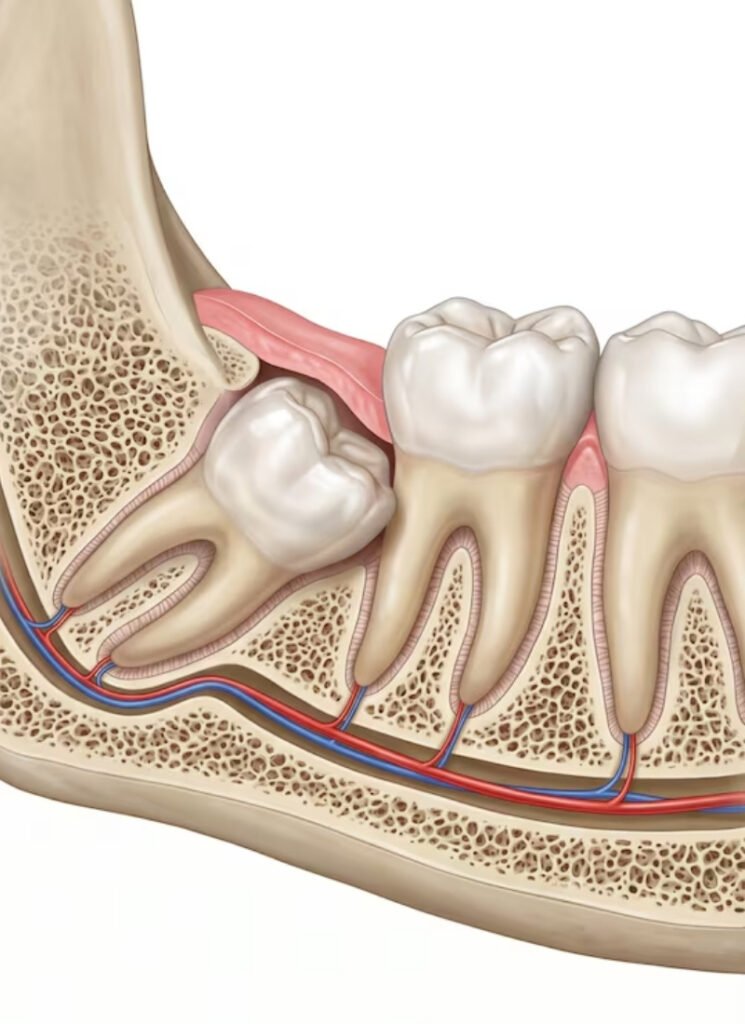
Wisdom tooth removal is a dental procedure in which one or more third molars are extracted when they cause problems or present a clinically significant risk to nearby structures. Wisdom teeth may erupt fully, emerge only partially, remain trapped beneath the gums, or develop within the jawbone.
A fully erupted wisdom tooth may be removed through a straightforward extraction if it is accessible. An impacted tooth may require a surgical procedure involving an incision in the gum and, in some cases, removal of a small amount of surrounding bone or sectioning of the tooth. Not every wisdom tooth needs to be removed; the decision depends on symptoms, examination findings, and imaging.
What Types of Wisdom Tooth Problems May Require Treatment?
Wisdom teeth can cause different problems depending on their position, the available space, and whether they have erupted fully.

Impacted Wisdom Teeth
Teeth trapped beneath the gums or jawbone because there is insufficient space to erupt normally.

Partially Erupted Teeth
Teeth with a portion of the crown exposed, allowing food and bacteria to collect beneath the gum.

Wisdom Tooth Decay
Cavities affecting a wisdom tooth that may be difficult to clean or restore.

Wisdom Tooth Cysts
Fluid-filled lesions that may occasionally develop around an impacted tooth and affect surrounding bone.

Repeated Pain or Swelling
Episodes of discomfort or inflammation associated with the tooth’s position or surrounding gum tissue.
When Should You Consider Wisdom Tooth Removal?
Wisdom tooth removal may be recommended when a tooth causes recurring symptoms, cannot be maintained adequately, or threatens the health of nearby teeth and tissues. An examination helps determine whether extraction is necessary and how complex the procedure may be. Consider consulting an oral and maxillofacial surgeon if you experience:

Pain or tenderness at the back of the mouth

Swelling around a partially erupted wisdom tooth

Repeated gum infections or difficulty cleaning the area

Food trapping or an unpleasant taste around the tooth

Difficulty opening mouth during episodes of inflammation

Decay in wisdom tooth or damage to neighbouring molar
How Is a Wisdom Tooth Evaluated?
A proper evaluation helps establish the tooth’s position, identify existing complications, and assess the risks associated with removal.
Clinical Examination
The surgeon examines the wisdom tooth, surrounding gum tissue, mouth opening, signs of infection, and the condition of the neighbouring molar.
Dental Imaging
A panoramic dental X-ray is commonly used to assess the tooth’s position, root shape, and relationship to nearby structures. Additional imaging may be recommended when the initial findings raise specific concerns.
Nerve and Sinus Assessment
Lower wisdom teeth may lie close to the inferior alveolar nerve, while upper wisdom teeth may be near the maxillary sinus. The surgeon evaluates these relationships to plan the safest suitable approach.
Review of Medical History
Existing health conditions, medications, allergies, previous dental procedures, and relevant bleeding or healing concerns are reviewed before treatment.
Choosing the Right Wisdom Tooth Removal Procedure
The procedure depends on whether the tooth has erupted, how deeply it is impacted, its root anatomy, and its relationship to surrounding structures.
Routine extraction
For a fully erupted tooth that is accessible
Surgical extraction
For a tooth that requires access through the gum
Sectioning of the tooth
When dividing the tooth helps facilitate controlled removal
Coronectomy
In selected lower wisdom teeth at high risk of nerve injury
Observation and monitoring
When the tooth is healthy and there is no clear indication for removal

What Happens During Wisdom Tooth Removal?
Wisdom tooth removal is commonly performed under local anaesthesia. Sedation or general anaesthesia may be considered in selected cases depending on the complexity of surgery, the number of teeth being removed, and the patient’s clinical needs.
For a straightforward extraction, the tooth is loosened and removed through the existing opening. For an impacted wisdom tooth, the surgeon may make an incision in the gum, remove a limited amount of bone if necessary, and divide the tooth into sections to facilitate removal. The area is then cleaned, and stitches may be placed depending on the procedure.
The duration varies according to the tooth’s position, root anatomy, and surgical complexity. Before surgery, the surgeon explains the planned approach and discusses relevant risks, including bleeding, infection, dry socket, and possible nerve-related symptoms in selected cases.

Dr. Sanmit Joshi
Expertise in Wisdom Tooth Surgery and Complex Oral Procedures
Dr. Sanmit Joshi is an Oral & Maxillofacial Surgeon with an MDS in Oral & Maxillofacial Surgery and a Fellowship in Head & Neck Surgical Oncology from Tata Memorial Hospital, Mumbai. His surgical training includes the assessment and management of complex conditions involving the teeth, jaws, and surrounding facial structures. For wisdom tooth cases, he evaluates tooth position, root anatomy, proximity to important nerves and adjacent structures, and the need for routine or surgical extraction.
His approach focuses on appropriate clinical and radiographic assessment, careful surgical planning, and clear guidance on recovery and follow-up. He consults at Jaslok Hospital and Research Centre, VED Hospital in Dadar, and Baysmiles Clinic at Kemps Corner, Mumbai.
Years of Post-Fellowship Experience
Years in Oral & Maxillofacial Surgery
Advanced Surgical Training Programs
Specialized Areas of Surgical Expertise
Frequently Asked Questions About Wisdom Tooth Removal
Does every wisdom tooth need to be removed?
No. Wisdom teeth that are healthy, fully erupted, functional, and easy to clean may be monitored rather than removed. Extraction is generally considered when there is disease, recurring symptoms, damage to adjacent teeth.
How long does it take to recover from wisdom tooth surgery?
Many patients notice improvement within several days, but complete healing takes longer. Recovery depends on the complexity of removal, the number of teeth extracted, and individual healing.
Can wisdom tooth removal damage a nerve?
Lower wisdom tooth roots may lie close to nerves responsible for sensation in the lower lip, chin, or tongue. Nerve-related symptoms are an uncommon but important risk in selected cases, and imaging helps assess the relationship before surgery.
What should I eat after wisdom tooth removal?
Soft foods that require minimal chewing are generally suitable during early recovery. Avoid very hot foods initially and follow the surgeon’s instructions about when to resume your normal diet.
At what age should wisdom teeth be evaluated?
Wisdom teeth commonly develop during the late teens and early twenties, although timing varies. Evaluation may be appropriate when they begin erupting, symptoms develop, or dental imaging identifies a concern.
Is wisdom tooth removal painful?
Local anaesthesia is used to control pain during the procedure. Some soreness and swelling are expected afterward, particularly following surgical removal of an impacted tooth, and can usually be managed with the recommended medication and aftercare.
What is a dry socket after wisdom tooth removal?
Dry socket occurs when the blood clot in the extraction site is lost or breaks down too early, exposing the underlying bone and causing significant pain. It requires dental assessment and appropriate treatment.
Can I remove all four wisdom teeth at once?
In selected cases, all four can be removed during one treatment session. The decision depends on the tooth positions, surgical complexity, medical history, anaesthesia plan, and the patient’s recovery needs.
Get an Evaluation for Wisdom Tooth Removal in Mumbai
Pain, repeated swelling, or an impacted wisdom tooth may require more than a routine dental examination. Book a Consultation with Dr. Sanmit Joshi to discuss your wisdom tooth symptoms, examination findings, and available treatment options.
