
Transoral Laser Microsurgery (TLM) in Mumbai
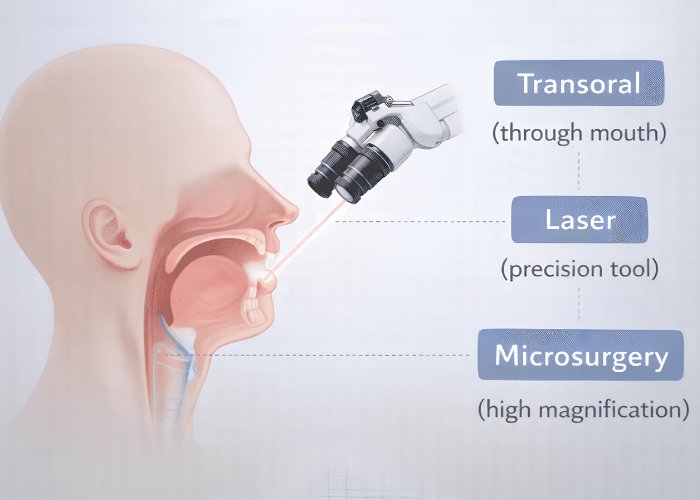
What Is Transoral Laser Microsurgery?
Transoral Laser Microsurgery uses magnification and a focused laser to remove abnormal tissue through the mouth. It is commonly used for selected cancers and precancerous lesions of the larynx, including areas around the vocal cords. Its suitability depends on whether the lesion can be adequately accessed and removed while preserving important functions.
The technique may reduce the need for open surgery in appropriately selected cases. However, it is not suitable for every tumour, and some patients may require radiotherapy, other surgical approaches, or a combination of treatments.
What Conditions May Be Treated with Transoral Laser Microsurgery?
TLM may be suitable for selected tumours in the larynx and throat when the affected area can be accessed and removed safely through the mouth. The treatment choice depends on the tumour’s location, extent, and relationship to surrounding structures.

Vocal Cord Lesions
Treating selected early cancers and abnormal growths affecting the vocal cords.

Supraglottic Tumours
Removing selected tumours affecting structures above the vocal cords.

Hypopharyngeal Cancer
Treating selected cancers in the lower part of the throat.

Oropharyngeal Tumours
Removing selected tumours involving the tonsils or base of the tongue.
When Should You Seek a Head and Neck Evaluation?
Persistent changes in the voice, swallowing difficulties, or a lasting throat symptom should be evaluated rather than managed with repeated self-medication.
Consider a specialist assessment if you experience:

Hoarseness or voice changes that do not resolve.

Persistent throat discomfort or pain while swallowing.

A sensation that food is sticking in the throat.

Blood in saliva or repeated throat bleeding.

A lump in the neck or persistent one-sided throat symptoms.

Diagnosed laryngeal or throat lesion requiring treatment.

How Is Transoral Laser Microsurgery Planned?
Before recommending TLM, the specialist evaluates the lesion and determines whether it can be removed adequately through the mouth.
Clinical Examination
Symptoms, medical history, voice changes, swallowing concerns, and neck findings are reviewed.
Endoscopic Assessment
A flexible or rigid scope may be used to examine the larynx and throat. Direct examination under anaesthesia may be required to assess the lesion in detail.
Imaging
CT or MRI may help establish the extent of disease and its relationship to nearby structures.
Biopsy and Histopathology
A tissue sample confirms the diagnosis when required. The findings help guide treatment selection.
TLM or Another Treatment: How Is the Choice Made?
TLM is one of several options for selected laryngeal and throat tumours. The most appropriate approach depends on the diagnosis, tumour extent, expected functional outcome, and the patient’s overall health.
Transoral Laser Microsurgery
Accessible tumours suitable for removal through the mouth using a laser and microscope
Radiotherapy
Selected cancers where radiation offers an appropriate treatment approach
Open Surgery
Tumours that cannot be adequately accessed or removed through a transoral approach
Combined Treatment
Cancers requiring surgery alongside radiotherapy or other treatments

What Happens During Transoral Laser Microsurgery?
TLM is performed under general anaesthesia. Special instruments are passed through the mouth to expose the tumour, while a microscope provides magnified visualisation.
- Tumour Exposure: The surgeon positions the instruments to obtain a clear view of the affected area.
- Laser Removal: The tumour is removed using a focused laser, with the aim of achieving adequate clearance while limiting unnecessary removal of surrounding tissue.
- Tissue Examination: The removed specimen is sent for histopathological analysis. Surgical margins are assessed to determine whether the tumour has been adequately removed.
- Postoperative Monitoring: The team monitors breathing, bleeding, swallowing, and other aspects of recovery. Further treatment is decided after reviewing the final pathology findings.
The duration of surgery and hospital stay depends on the tumour’s location, the extent of removal, and the patient’s recovery.
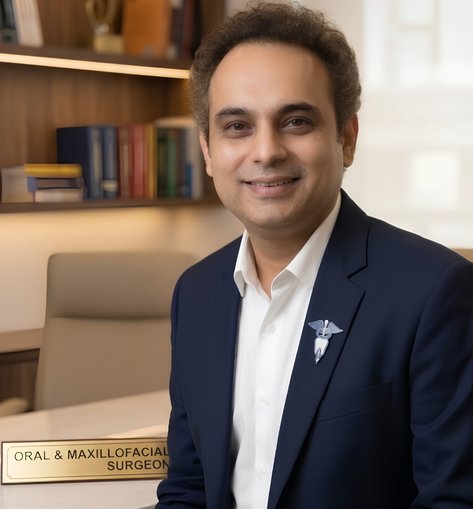
Dr. Sanmit Joshi
Expertise in Head & Neck Surgical Oncology
Dr. Sanmit Joshi holds an MDS in Oral & Maxillofacial Surgery and completed a Fellowship in Head & Neck Surgical Oncology at Tata Memorial Hospital, Mumbai. His clinical experience includes complex oncological resections and the assessment of conditions affecting the oral cavity, jaws, and head and neck region. Treatment planning involves understanding the diagnosis, extent of disease, surrounding anatomy, and functional considerations.
For lesions of the larynx and throat, the suitability of TLM depends on specialised endoscopic assessment and the expertise required to perform the procedure safely. Patients should be evaluated by an appropriately qualified head and neck or laryngeal surgeon, with further treatment coordinated according to the diagnosis. Dr. Joshi consults at Jaslok Hospital and Research Centre, VED Hospital in Dadar, and Baysmiles Clinic at Kemps Corner, Mumbai.
Years of Post-Fellowship Experience
Years in Oral & Maxillofacial Surgery
Advanced Surgical Training Programs
Specialized Areas of Surgical Expertise
Frequently Asked Questions About Transoral Laser Microsurgery
Can TLM be performed more than once?
In selected cases, repeat TLM may be considered if a lesion returns or further removal is needed. The decision depends on the location of the lesion, previous treatment, and the condition of the surrounding tissues.
Will I need speech therapy after TLM?
Some patients benefit from voice therapy, particularly when surgery involves the vocal cords. A specialist may recommend therapy based on voice quality and healing.
What happens if the surgical margins are not clear?
The treatment team reviews the pathology findings and may recommend further surgery, radiotherapy, or another approach depending on the tumour type and overall clinical picture.
What should I bring to a TLM consultation?
Bring previous biopsy reports, endoscopy findings, imaging scans, pathology reports, medication details, and records of any earlier cancer treatment. These help the specialist review the diagnosis and discuss suitable options.
How soon can I eat after TLM?
The timing depends on the area treated and the extent of surgery. Some patients can resume oral intake relatively soon, while others may need a modified diet or temporary feeding support.
Will I need a tracheostomy after TLM?
Most patients do not require a tracheostomy, but it may be necessary in certain complex cases if airway swelling or other concerns affect breathing.
Can TLM be combined with neck lymph node surgery?
Yes. If the cancer has spread to neck lymph nodes or carries a relevant risk of spread, neck dissection may be recommended alongside or separately from the primary tumour treatment.
How often are follow-up visits needed after TLM?
Follow-up is usually more frequent during the initial recovery period and may become less frequent over time. The schedule depends on the diagnosis, treatment findings, and risk of recurrence.
Take the Next Step Towards Head and Neck Evaluation
A specialist review can help establish the diagnosis and determine whether TLM or another treatment approach is suitable. Consult Dr. Sanmit Joshi for Transoral Laser Microsurgery (TLM) in Mumbai.
