
Transoral Robotic Surgery (TORS) in Mumbai

What Is Transoral Robotic Surgery?
TORS uses a surgeon-controlled robotic system to guide instruments through the mouth and operate in selected areas of the throat. The system provides magnified visualisation and allows precise instrument movement in confined spaces.
The approach may help remove suitable tumours while avoiding an external incision. However, TORS is not appropriate for every head and neck cancer. The decision depends on whether the tumour can be safely accessed and removed, the expected effect on speech and swallowing, and whether other treatments are needed.
What Conditions May Be Treated with TORS?
TORS may be considered for selected tumours in areas of the oropharynx where access through the mouth allows the surgeon to reach the affected tissue. The treatment plan depends on the tumour’s extent, lymph node involvement, and overall clinical findings.

Tonsil Cancer
Removing selected tumours arising in the tonsils and surrounding oropharyngeal tissues.

Base of Tongue Tumours
Accessing selected growths at the back of the tongue.

Oropharyngeal Lesions
Evaluating selected tumours involving accessible tissues of the oropharynx.

Selected Unknown Primaries
Investigating and treating certain cancers when the primary site remains unclear after initial evaluation.
When Should You Seek a Head and Neck Evaluation?
Persistent symptoms involving the throat, tongue base, or neck should be assessed, particularly when they remain unexplained or progressively worsen.
Consider a specialist evaluation if you experience:
- Persistent throat pain, especially on one side.
- Difficulty or pain while swallowing.
- A lump in the neck that does not resolve.
- Persistent ear pain without an obvious ear-related cause.
- A change in speech or a persistent sensation of something stuck in the throat.
- An abnormality detected during an examination or biopsy that requires further investigation.
These symptoms can have several causes and do not necessarily indicate cancer. Examination and appropriate investigations help establish the underlying condition.

How Is TORS Suitability Evaluated?
The assessment establishes the diagnosis, maps the extent of the disease, and determines whether a transoral robotic approach can achieve adequate tumour removal.
Clinical Examination
The specialist reviews symptoms, medical history, oral and throat findings, and any palpable neck lymph nodes.
Endoscopic Assessment
A scope may be used to examine areas that cannot be fully assessed during a routine oral examination. Examination under anaesthesia may be required.
Biopsy and Histopathology
Tissue analysis confirms the diagnosis and identifies the tumour type.
Imaging and Staging
CT, MRI, or PET-CT may be recommended to assess the primary tumour, nearby structures, lymph nodes, and possible disease spread.
TORS or Another Treatment: How Is the Choice Made?
Treatment selection depends on the tumour site, stage, accessibility, functional considerations, and the likelihood of achieving adequate disease control.
Transoral Robotic Surgery
Selected tumours accessible through the mouth using a robotic surgical system
Transoral Laser Microsurgery
Suitable lesions that can be reached and removed using laser instruments and magnification
Radiotherapy
Selected cancers where radiation is an appropriate primary or additional treatment
Open Surgery
Tumours that cannot be adequately accessed or removed through a transoral approach
Combined Treatment
Cases requiring surgery with radiotherapy or other treatments based on disease extent and pathology

What Happens During Transoral Robotic Surgery?
TORS is performed under general anaesthesia by a suitably trained surgical team using a robotic system controlled by the surgeon.
- Surgical Access: A mouth-opening instrument provides access to the back of the mouth and throat.
- Robotic Positioning: The robotic camera and instruments are positioned to provide a magnified view and access to the target area.
- Tumour Removal: The surgeon removes the tumour and surrounding tissue as clinically required, aiming for adequate margins while preserving important structures where possible.
- Specimen Analysis: The removed tissue is examined by a pathologist to assess the tumour and surgical margins.
- Postoperative Monitoring: The team monitors breathing, bleeding, pain, and swallowing. Further treatment is determined after reviewing the pathology findings and overall stage.
The procedure’s duration and complexity vary according to the tumour’s location and the extent of surgery.
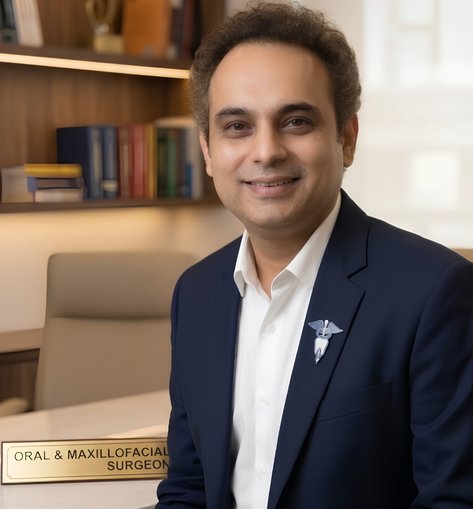
Dr. Sanmit Joshi
Expertise in Head & Neck Surgical Oncology
Dr. Sanmit Joshi holds an MDS in Oral & Maxillofacial Surgery and completed a Fellowship in Head & Neck Surgical Oncology at Tata Memorial Hospital, Mumbai. His clinical experience includes complex oncological resections and the assessment of conditions affecting the oral cavity, jaws, and head and neck region. Treatment planning considers the diagnosis, extent of disease, surrounding anatomy, and functional goals.
For oropharyngeal tumours, selecting a surgical approach requires detailed assessment of tumour accessibility, the expected extent of removal, and potential effects on swallowing and speech. Patients should be evaluated by an appropriately qualified head and neck surgical team with the necessary expertise and access to robotic surgery when indicated. Dr. Joshi consults at Jaslok Hospital and Research Centre, VED Hospital in Dadar, and Baysmiles Clinic at Kemps Corner, Mumbai.
Years of Post-Fellowship Experience
Years in Oral & Maxillofacial Surgery
Advanced Surgical Training Programs
Specialized Areas of Surgical Expertise
Frequently Asked Questions About Transoral Robotic Surgery
Is TORS performed under general anaesthesia?
Yes. The procedure is performed under general anaesthesia, with the airway managed by the anaesthesia team throughout surgery.
Is a hospital stay required after TORS?
Yes, hospital observation is generally required. The length of stay depends on recovery, swallowing ability, bleeding risk, and whether additional procedures were performed.
Will I need a feeding tube after TORS?
Not everyone does. Temporary feeding support may be required if pain, swelling, or the extent of surgery makes adequate oral intake difficult.
What follow-up is needed after TORS?
Follow-up includes examination of the surgical site, review of pathology and any additional treatment, assessment of swallowing and speech, and surveillance for recurrence. The schedule depends on the diagnosis and individual clinical findings.
Can TORS be used for HPV-associated oropharyngeal cancer?
It may be an option for selected HPV-associated cancers of the oropharynx. Treatment depends on the tumour’s extent, lymph node involvement, and the overall treatment plan.
Will I have a visible scar after TORS?
TORS is performed through the mouth, so it generally does not require an external incision in the neck for removal of the primary tumour. A separate neck incision may be needed if neck dissection is also performed.
Can neck lymph nodes be treated during the same operation?
Yes. When indicated, neck dissection may be performed during the same surgical episode or planned separately, depending on the disease and treatment strategy.
What happens if cancer is found at the surgical margin?
The specialist team reviews the pathology report alongside other risk factors. Further surgery, radiotherapy, or another treatment may be recommended depending on the findings.
Take the Next Step Towards Head and Neck Evaluation
A specialist assessment can help establish whether a throat or oropharyngeal tumour is suitable for surgery and whether TORS is an appropriate option. Consult Dr. Sanmit Joshi for Transoral Robotic Surgery in Mumbai.
